Subagent Spawning and Task Decomposition Strategies
Context isolation prevents token degradation as AI systems handle longer, more complex tasks.
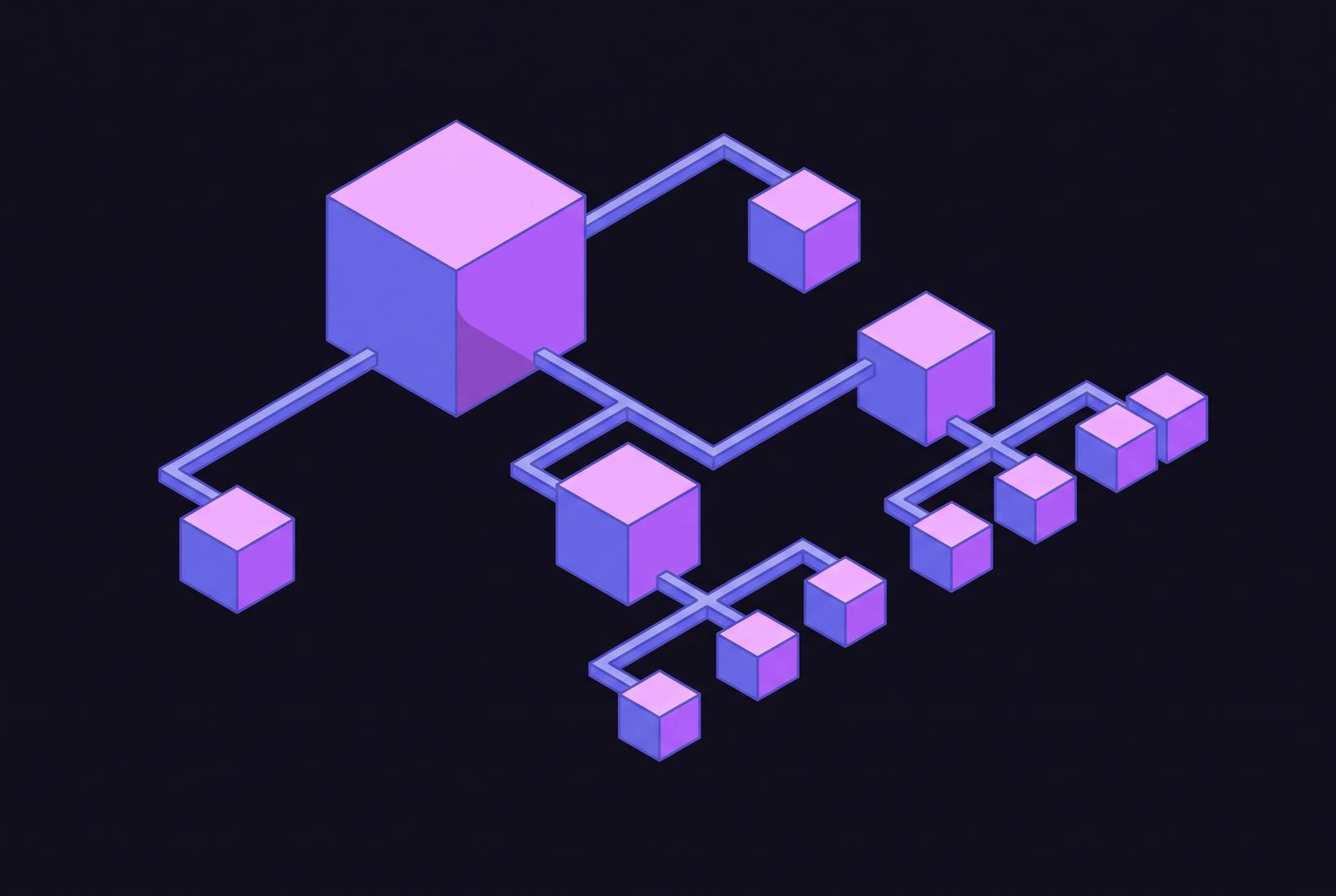
A subagent is a helper an AI system spawns mid-task, runs in its own isolated session, and terminates once it hands back a single result. It never sees the parent's full history, and the parent never sees its intermediate work. That mechanic, context isolation, is the entire reason subagent architecture exists, and understanding when to use it (and when not to) separates agentic systems that scale from ones that quietly rot under their own token load.
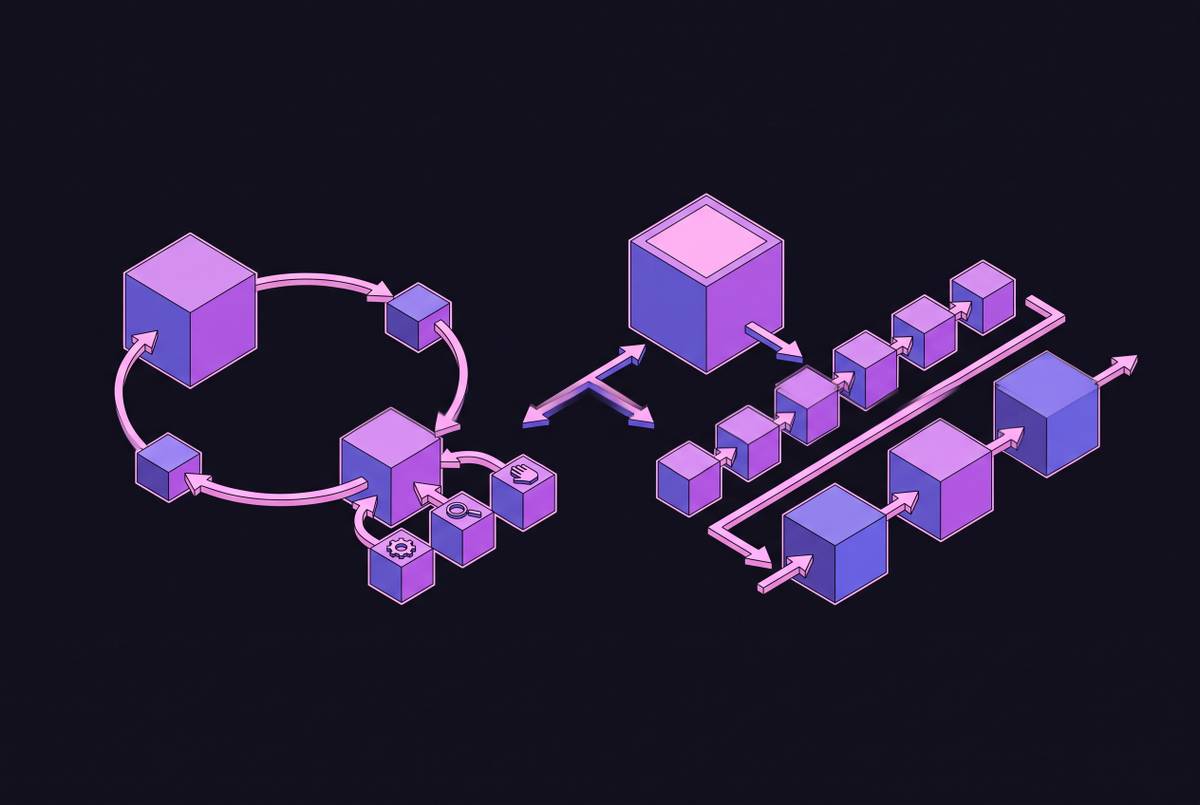
Subagents get confused with two adjacent ideas: a multi-agent team and orchestration. A multi-agent team is a standing group of peers, set up ahead of time, collaborating persistently on shared work. Orchestration is a manager agent routing individual steps through specialists it already knows about, usually with a review pass at the end. Subagent spawning is neither. It's dynamic and disposable: the parent decides mid-task that a piece of work should happen somewhere else, dispatches it, and moves on once the answer comes back. These three patterns stack rather than compete. A specialist sitting on a standing team can spawn its own subagents for a sub-problem. An orchestration run can hand any single step to a subagent that starts with a completely clean session.
Taskade's explainer on subagents offers the analogy that makes this concrete: delegating to a colleague who disappears for an hour, hits three dead ends nobody else needs to know about, and comes back with one line: "yes, by the 14th, with a caveat about shipping." The parent never sees the hour. It sees the conclusion. That compression is the point.
Context isolation and why it changes what is possible
Every model has a hard ceiling on how much context it can hold, and quality degrades well before that ceiling gets reached. The failure mode has a name now: context rot. Subagent architecture was built specifically to fight it.
Isolation works by giving the subagent its own context window and its own session. All the intermediate tool calls, the failed searches, the half-right drafts, stay inside that session. Only the final answer crosses back to the parent. This does two things at once: it keeps the subagent's workspace clean for the problem at hand, and it keeps the parent's context free for actual orchestration rather than a pile of noise it has to reason around.
The Sema Code paper, published in April 2026, names the concrete failure this isolation prevents. Without it, skill prompt instructions written for one subtask can bleed into the system prompt governing the next subtask, producing outputs that drift off target. Worse, subtask histories pile up inside the main context over the course of a long run, degrading reasoning quality right when the task usually gets harder, not easier.
The benefit compounds with parallelism. A parent spawning multiple subagents at once ends up holding only their short results, not the full volume of raw material each subagent had to work through. The work happens in parallel, side by side, and none of the reading crosses back into the parent's context.
That puts enormous weight on the moment of delegation. The subagent starts empty. Whatever the parent decides to include in that initial brief is the only thing the subagent has to work with, so the actual engineering decision, the one with leverage, is what to hand off, not how the subagent then does its job. Some framework implementations enforce this boundary at the framework level: subagents in such systems cannot spawn subagents of their own, because the spawning tool simply isn't included in a subagent's available tools. Isolation, in other words, isn't just a design preference in every implementation. Sometimes it's a hard constraint written into the tool list.
How decomposition decisions get made: from human judgment to automated complexity scoring
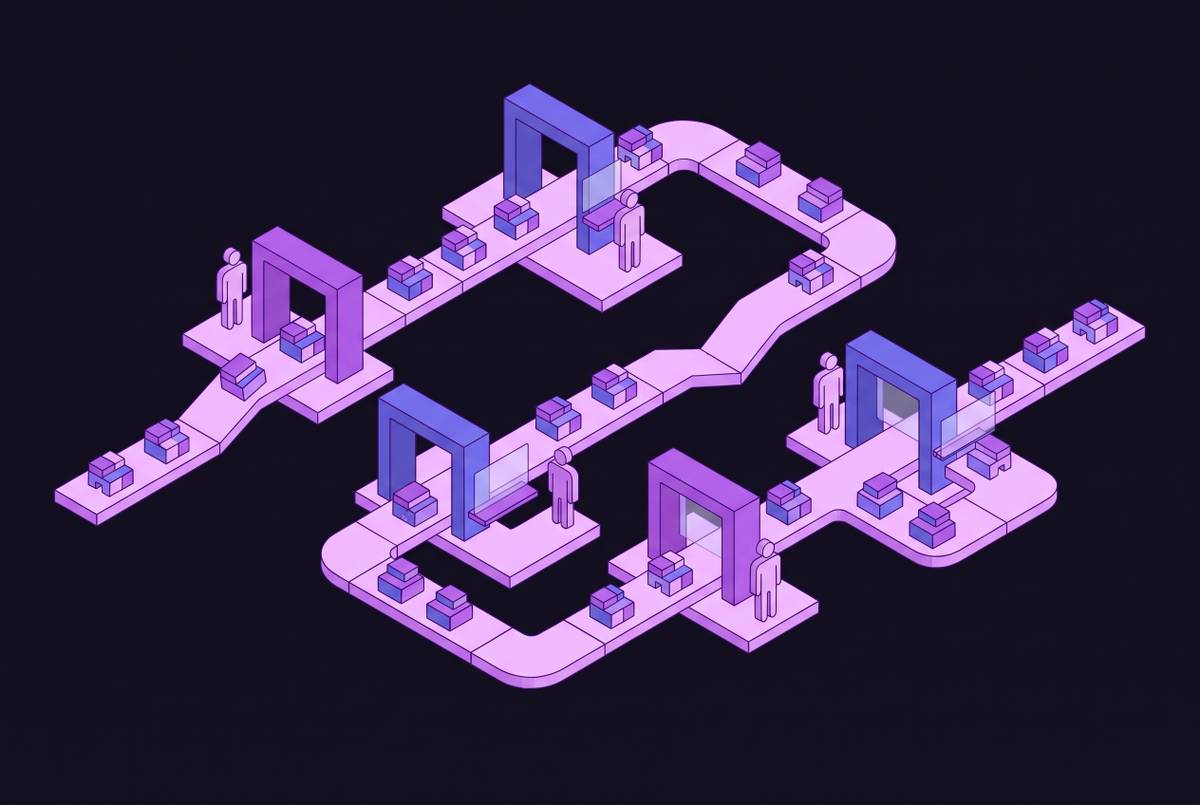
Not every piece of work deserves a subagent. The test is simple to state and harder to apply consistently: does the piece have a clear input, a clear output, and no dependency on the rest of the job. Comparing three vendors on price and feature set passes that test. Deciding which vendor to recommend does not, because that decision needs all three comparisons back plus whatever priorities the requester actually cares about. One is a fan-out job. The other is synthesis, and synthesis belongs at the top.
That evaluation happens during the parent's planning step, before any actual work starts. It's ordinary reasoning, not a specialized skill, applied to figure out which pieces of the job can stand on their own.
Some systems have started automating that judgment rather than leaving it to planning-step reasoning alone. The EffGen paper, from February 2026, describes a complexity analyzer that computes a score, C(q), from five weighted factors, and triggers spawning whenever that score clears a configurable threshold. In empirical testing, the classifier hit 95% accuracy on the decompose-or-don't decision, which is a strong result for what's ultimately a judgment call. The same system caps recursion: once spawning depth hits a set maximum, it executes locally instead of spawning again, which stops runaway hierarchies before they start eating their own budget.
Recursive spawning, subagents calling subagents, is architecturally possible even where it isn't blocked outright the way Spring AI blocks it. But it needs guardrails to stay sane. One proposed approach requires that when a subagent itself spawns further work, it must explicitly record what is being handed further down and what it is retaining itself. Without that bookkeeping, a three-layer spawn tree turns into a game of telephone where nobody, including the original parent, can say who's actually responsible for what.
A cost argument underlies all of this: getting the decomposition right reduces what the prompts need to carry. EffGen reports prompt compression of 70 to 80%, averaging 57% across its benchmarks, while preserving task semantics. Decomposition and prompt design aren't separate levers. Get the decomposition right and the prompts feeding each piece shrink accordingly, and the savings compound.
Once a task clears the bar for decomposition, the next question is what shape that decomposition takes. Four patterns solve different problems.
The four subagent coordination patterns
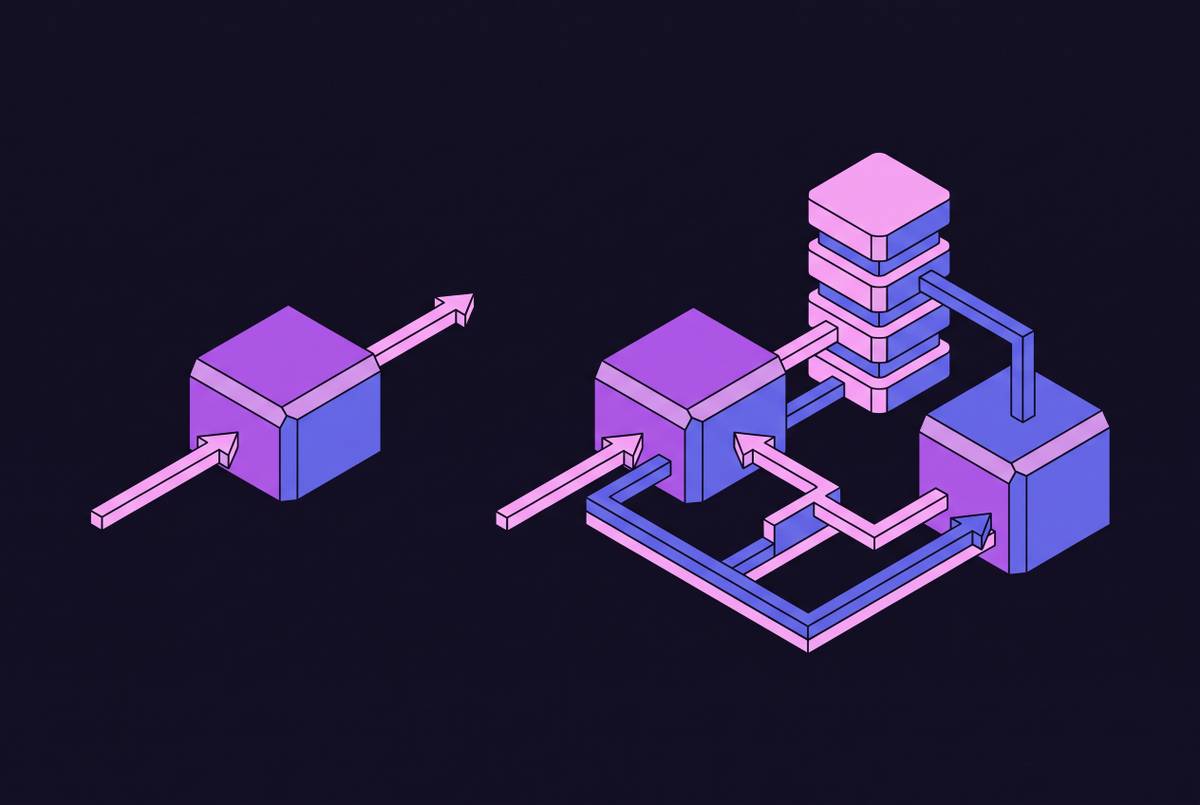
Inline Tool is the simplest version: the main agent calls a tool, that tool spawns a subagent behind the scenes, and the subagent's result comes back as the tool's response. From the main agent's point of view, calling a subagent looks identical to calling read_file or run_command. There's a synchronous variant, where the call blocks until the subagent finishes, and an asynchronous variant, where the tool returns an agent ID immediately and the result arrives later as a notification while the main agent keeps working on other things. Use this pattern when the task is self-contained, the handoff interface is clean, and coordination overhead needs to stay near zero.
Spawn-and-Wait makes the lifecycle control explicit rather than hidden inside a single tool call. spawn_agent dispatches work and returns right away with an ID. wait_agent blocks until one or more of those spawned agents finish. The model itself controls the sequencing, deciding when to keep working and when to pause and wait. A model that calls wait_agent immediately after every spawn gets no benefit over the Inline Tool pattern. The value only shows up if the model actually interleaves its own work in the gap. Best suited to situations with several genuinely independent tasks that can run at the same time, where the main agent doesn't need any one subagent's result before starting the next.
Long-Lived Subagent describes subagents that, instead of terminating on delivery, persist across multiple interactions. Communication happens through ongoing messages, so the main agent can send follow-up instructions or check status mid-task rather than waiting for one final answer. That's the key contrast with fire-and-forget patterns: it allows correction partway through, instead of discovering the subagent went sideways only after it's finished. Fits open-ended work where the parent might need to redirect based on early findings, or tasks that require the subagent to hold state across several rounds.
Hierarchical Sub-Orchestrator describes a scale at which the top-level orchestrator delegates to entire sub-systems rather than individual agents. It's delegating to entire sub-systems, each managing its own pool of subagents and handling its own error recovery, which keeps the top level from drowning in detail it doesn't need. One widely cited deployment of the orchestrator-worker architecture gave tens of thousands of bankers access to a large library of procedures in around 30 seconds, down from a previous 10 minutes. That's the kind of gain that justifies the added layers. And the cost is real too: more layers mean more coordination logic to write, more latency at each boundary, and more places for something to fail quietly.
Across all four patterns, routing criteria matter more than which pattern gets picked. Production systems using the supervisor pattern with explicit routing rules, "research tasks involving market data go to the Market Research Agent," consistently outperform systems running on vague instructions like "use the right agent." LangGraph and CrewAI both build the supervisor-worker pattern in natively, and thinking.inc data shows LangChain, LangGraph included, is used by around 45% of teams building production agent systems. It's the better fit for complex, stateful workflows that need fine-grained control over how state moves between steps.
Why more decomposition is not always better, the case against spawning
Princeton NLP found a single agent matched or outperformed multi-agent systems on 64% of benchmarked tasks, when both were given the same tools and the same context. That's a significant result: it means the majority case, on that benchmark set, favored simplicity. It means the majority case, on that benchmark set, favored simplicity.
Where multi-agent did win, the margin was thin against the cost. Multi-agent systems added roughly 2.1 percentage points of accuracy, at close to double the cost of running a single agent. That ratio only makes sense in contexts where the accuracy gain is worth paying for twice the compute, which is a narrower set of situations than the current enthusiasm for multi-agent design would suggest.
Research into agentic systems backs this up from a different angle: excessive planning and decomposition actively hurts performance on tasks that don't decompose cleanly. Avoiding unnecessary decomposition can improve task completion and reduce token consumption, which is the opposite of what a lot of orchestration-first design assumes.
A wider gap exists: an agent that looks impressive in a demo is typically running well below production-grade reliability. Production needs 99% or better, and closing that gap, circuit breakers, retry logic, context management, observability, is the real orchestration investment, far more than the coordination pattern chosen on day one. Data reported by ranksquire.com shows only 11% of agentic systems make it to production. Missing plumbing around orchestration is a primary reason most of those systems fall short.
Adaptive orchestration is one response to this. The AdaptOrch research argues that as large language models converge toward comparable benchmark performance, selecting a single fixed model or strategy loses its edge, and systems that analyze task characteristics and dynamically pick a coordination strategy avoid piling complexity onto tasks that never needed it.
The practical heuristic that falls out of all this: start with one agent. Run one workflow against real users for a few weeks. Measure where it actually fails. Then decompose the failures, not the whole workflow, and only graduate to a supervisor-workers setup if specialist subagents would fix those specific failure modes. Not before.
What this architecture means for teams building AI-powered workflows at scale
The production gap described above isn't primarily a model-quality problem. Most of the systems that never make it past demo stage fail on orchestration, state persistence, failure recovery, and the coordination logic that multi-agent designs multiply rather than absorb. Adding subagents to a system that hasn't solved state persistence just gives the underlying problem more surface area to fail across.
For agencies running AI workflows across a portfolio of clients, this raises a specific operational question: which decomposition decisions can be standardized across every client, and which need to be handled case by case. Get that wrong in one direction and simple client workflows get buried under orchestration machinery they never needed. Get it wrong in the other direction and the complex accounts, the ones that actually need coordinated subagent work, get under-resourced because everything's running on a one-size template.
AI visibility work, tracking how a brand shows up across ChatGPT, Google AI Overviews, and Perplexity, is a clean example of where this decision actually plays out. Per-platform citation tracking, source auditing, and content gap analysis are genuinely independent tasks, and they're natural candidates for fan-out subagent patterns: spawn one subagent per platform, let them run in parallel, bring back short results. Synthesis and strategic recommendation are a different kind of work entirely and have to stay at the orchestrator level, because that's where all the individual findings need to be weighed against each other and against the client's actual priorities.
That distinction matters more once you factor in how unstable AI citations actually are. Available data suggests that 40 to 60% of cited sources change month to month across Google AI Mode and ChatGPT. A monitoring workflow built on that kind of churn has to run frequently and independently per platform, and manually checking each surface by hand doesn't scale once that workload is multiplied across a real client portfolio. Automated, parallel subagent execution is a better fit for that specific shape of problem than sequential manual review ever was.
An orchestration layer for agencies managing AI visibility at that scale can decompose the monitoring, reporting, and analytics work across many brands so account teams receive synthesized findings, not raw platform-by-platform data dumps they'd have to reconcile themselves. The enablement side, training account teams to actually understand and speak to the AI visibility landscape, follows the same underlying principle as the architecture itself. Specialist knowledge should come back in a form someone can use immediately, not get pushed down to the generalist as raw, undigested complexity.
The design principle carries over cleanly from the technical pattern to the operational one. A parent agent should hold the goal and a handful of short results. The same compression that makes a subagent worth spawning in the first place is what makes managing AI visibility across a whole portfolio of clients tractable instead of overwhelming.
Sources
- What Are Subagents? Spawned AI Agents Explained (2026)
- How Agents Manage Other Agents: Four Subagents Patterns in 2026 | by Kushal Banda | Bootcamp | Medium
- Sema Code: Decoupling AI Coding Agents into Programmable, Embeddable Infrastructure
- Spring AI Agentic Patterns (Part 4): Subagent Orchestration
- EffGen: Enabling Small Language Models as Capable Autonomous Agents